Sunday, 4 May 2014

Megabus from Amsterdam to Brussels


Since Fyra stopped transportation between Amsterdam and Brussels I was wondering if there is way to get there cheaper and convenient than usual NS trains with two over stops.
I found that megabus has connection between cities. But I've never traveled by megabus in Europe.
Does anyone have such experience? Or maybe someone knows better way to get to Brussels from Amsterdam?
shareimprove this question
add comment
Megabus is okay. At this time it is one of the more sensible options. You can also check Eurolines. They have similar prices and a lot of connections. Choose what suits you best. Note that Eurolines will drop you near the Brussels North railway station. Megbus stops near the Central station, a stone's throw from the Grand Place. The Central station is a bit better connected to the local public transport network than the North station. But eventually it depends on where you want to go.
Thalys would be a more convenient option (quicker and more comfortable) but significantly more expensive than the bus!
The CEO of the Belgian railways has announced "some solutions" for this week, without specifying which ones ... (Source). Stay tuned!
UPDATE (01/02/2013)
The promised solution is there. You can read the official relaese in Dutch or French.
As of the 18th of February 2013, there will be two direct IC trains from Brussels to The Hague, taking 2h15 and stopping in Mechelen, Antwerp, Roosendaal, Dordrecht and Rotterdam. As of the 11th of March 2013, there will be 8 daily trains. Due to network congestion, the trains will not continue to Amsterdam. Travelers to Amsterdam have to change trains in Rotterdam. During the weekends the trains will only run from Antwerp to The Hague, due to works on the Brussels-Antwerp line.
A light a the end of the tunnel? Wait and see. In Summer there will be a final decision.
shareimprove this answer
   
Thank you a lot! –  Eugen Martynov Jan 28 '13 at 20:37
   
Thalys takes 1 h 50, and costs from 34 € if you take it very soon (up to 3 months before). calendrier.voyages-sncf.com/resultat/OUTWARD_DATE/21-02-2013/… –  travelot Jan 29 '13 at 10:30
   
I know. But I have seen bus tickets for 13 Euros. That's what I meant by significantly cheaper. – PERSONA NON GRATA Jan 29 '13 at 12:21
   
Thalys is the better option.. Its 34 Euro per way and its the smooth travel to there.. We enjoyed a lot and feel the pleasure inside thalys... –  user6555 Apr 29 '13 at 18:29
   
If you are able to find tickets at that price, the yes it is the better option. But if you don't ... – PERSONA NON GRATA Apr 29 '13 at 18:46 
   
It's also about how much you value your time. Bus takes several hours longer, that's poor value for money IMO (unless you value your time at less than €10 an hour). –  jwenting May 1 '13 at 6:47 
   
That's correct and I agree. However, the value of time can depend on the time of day and on the date (working day, weekend, holiday, ...). –  PERSONA NON GRATA May 1 '13 at 9:01
1 
I agree with @MarcelC.I can easly find where to spend required 1.5 hours - read the book, watch the film. The difference is more than 20 euros per ticket –  Eugen Martynov Jun 17 '13 at 15:42
add comment

Tips for Planning Travel to Spain


These tips are for first time travelers to Spain. Many seem obvious, but one is always surprised at questions new travelers ask in the Trip Advisor forums. One has to do some homework if one's trip will be one of pleasure and have less stress.
1. Buy a book about travel to Spain. Read it and decide what parts of Spain interest you and which cities you want to visit.
2. Get an idea of the geography of Spain. This is a good article from Wikipedia:
Be aware that Spain is the second largest country in Western Europe (after France) and one of the most mountainous (after Switzerland). The central meseta is a highland plateau and Madrid is on this meseta. Be aware of distances between cities. Google Maps or the Via Michelin website can tell you what these distances are.
3. The best time to travel in Spain is spring and fall because that is when good weather occurs. The months of April, May, June, September, and October are very good for travel. Summer is quite hot, especially in inland cities like Seville, Cordoba, and Madrid. The months of July and August are very crowded in resorts along the Mediterranean, so early reservations for hotels are required for these areas.
If one want to visit cities in northern Spain near the Atlantic, such as San Sebastian, Oviedo, and Santiago de Compostela and the rest of Galicia, the months of July and August are the best. Barcelona, the Costa Brava, Valencia, and the Balearic Islands are best from May to September.
The Costa del Sol and Almeria are the best places to visit during winter because they are the warmest. The Costa del Sol has balmy weather during summer. Almeria hardly gets any rain during the year. Nights in Granada are always cool because it is high up in the mountains. The central plateau gets weather extremes during summer and winter.
There are many weather sites that will give one the average temperatures by month for every city in Spain. It is best to check them before making travel plans. Be careful of traveling during winter, especially if you are driving. Many mountain passes get closed and having chains is very important to have in a car.
It makes no sense to travel to places like Leon, Burgos, Vitoria, Pamplona, and Logroño during winter. They get very cold and have much snow and ice. Not all of Spain is sunny all year long. Check the weather for each place you want to visit before making travel plans. The following site will give one average temperatures by month for each city.
4. During fall, many resorts in the north of Spain and along the Mediterranean have many of their stores and restaurants closed for the season. This may happen in the middle of September. This never happens in the Costa del Sol, which is always open because there are many northern Europeans who migrate during this time and spend winter in the area.
It is also a fallacy that most stores and restaurants close up during summer in big cities. Madrid is a city of 5 million and most stores and restaurants are open all year long.
5. Madrid is in the geographic center of Spain. King Felipe II chose Madrid to be the capital of Spain for this very reason.
The best way to travel from Madrid to other cities is by the high speed train, the AVE. It beats air travel because it is more comfortable than the plane, because you can move around in the train and go to the cafeteria car to eat snacks. Airlines like to restrict movement of passengers within the plane. Spain is now the European country with the largest network of high speed trains. If you have never traveled on a high speed train, you will enjoy the travel on the AVE.
Read Buying Renfe Tickets Online. Study the map which shows what cities that the AVE goes to. You may be able to get the web discounts if you buy early.
If one is to travel between extremities of Spain, such as Malaga and Barcelona, then the plane is better because the time will be much shorter than the train.
Be aware that the AVE still does not go to Granada, so the best way to get to this city may be the plane or the bus.
A Rail Pass will be more expensive than buying tickets at Renfe directly. You cannot get the discounts that Renfe gives.
6. Do not plan to see too much of Spain at one time. Many want to see one new city every day. They may be unaware of the distances between cities and one does not want to be traveling every single day. It is best to stay in cities for at a minimum of two nights, preferably three. That way one can see a city in depth and remember it. Spain has to be savored slowly with time for one to sit at a sidewalk cafe, eating tapas and drinking a glass of wine while one sees the passing parade or contemplates a monument.
7. Most travelers will want to experience Andalusia. From propaganda in foreign countries, Andalusia will be more like what a tourist expects of Spain, being the image of Spain, with women dancing flamenco, and with flowers in their hair. There are many monuments in Andalusia, such as the Alhambra Palace in Granada, the No. 1 tourist attraction of Spain, getting 3 million visitors a year. If you plan to visit the Alhambra, read Buying Alhambra Tickets Online. Cordoba has the Mezquita, and Seville has its Cathedral with the Giralda Tower and many other monuments. Do not forget Malaga, which has many monuments and museums, as well as its beaches and the best weather in Europe.
8. Many say that Spain's best invention are its tapas. About 30% of visitors say they come to Spain for gastronomy. In most places in Spain one can eat marvelously. One can eat tapas instead of having lunch or dinner and enjoy a wide variety of food. Read the top question in the Trip Advisor forums for each city you want to visit to see if there are articles about good restaurants and tapas places.
9. The best way to get euros is to use an ATM machine. Spain is the European country with the most ATM machines and every block in cities has an ATM machine. Be sure to contact your bank that you will be using your ATM in Spain. The back of your ATM card will show what networks your bank is tied to, so using an ATM machine with the same network will minimize any currency charges. When you use an ATM machine, try to find one inside a bank for better security. Most banks will have an ATM machine inside the bank and another on the sidewalk.
10. If you plan to rent a car and drive, read the Driving Guide for Foreigners. You will need an International Driving Permit. Be aware that it is almost impossible to find free parking on the street in cities. In big cities a commercial parking garage will cost between 18 and 30 euros a day. Hotels with parking will charge about 11 to 12 euros a night for parking. For Andalusia, check the top questions for parking guides for different cities. Rental Cars are available at any major airport with offices of the big international rental companies such as Hertz, Avis, Europcar...Some local companies received a lot of negative feedback such as Record Rent a Car.
11. You can see Spain with a group tour. However be aware that most tours of Spain will try to allow you to see the most monuments and cities, so they do not leave one with enough free time. One cannot dawdle with these tours. For many older travelers, they may be too fast paced and one may develop health problems because of this. Most of them go by bus, so it is not much fun to be traveling by bus all day. One can see Spain on one's own without a group tour if one plans properly. One is perfectly safe in Spain by going alone. If one is mature one does not need a chaperone or guide to tell him what to do all day long.
12. Read Money Saving Tips for Spain.
13. Electricity Info for Spain:
14. Have a Happy Trip in Spain!

Thursday, 1 May 2014

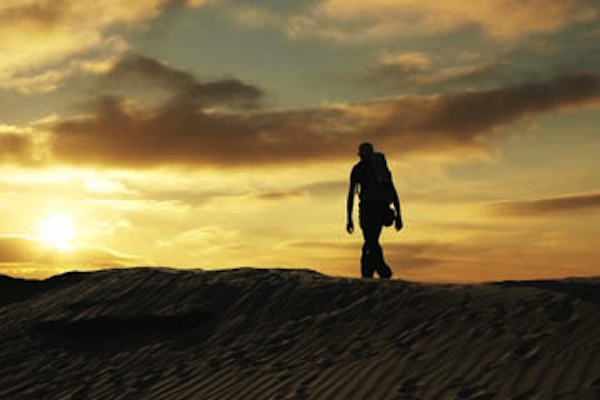
10 THINGS TO LEARN ABOUT YOURSELF WHEN TRAVELING ALONE

Alone. Photo by Galyna Andrushko
To travel alone is to find the answers you’ve been seeking and discover the questions to all your unfounded thoughts.
FIND YOURSELF IN SOLITUDE. Everybody hears this time and time again.
From the punishment of youth when sent on “timeout” to the isolation every individual needs in order to hibernate with one’s emotions. Even through days of work, locking the mind and body behind concealed doors in order to cram a semester’s final paper or spurn a creative project.
Isolation, solitude, being alone-these words derive a connotation ofgrowth and progress. They emphasize a deeper understanding not only of one’s surroundings, but also of the most significant and empowering quality-finding oneself within the present moment.
Who are you, I dare ask? Where are you? What are you doing, exactly? Why?
To find out I’ve a suggestion: quit work, take a leave of absence from work or school, and buy that one-way ticket to nowhere.
To travel alone is to find the answers you’ve been seeking and discover the questions to all your unfounded thoughts. It is your world. It is your adventure.
1. Responsibility
To take one’s life within one’s hands and have the freedom and maturity to mold it to one’s desires is to embrace this basic knowledge.
The one thing carrying the most weight, the quality of personality that enabled you-the solo traveler-to get here in the first place, is responsibility.
To take one’s life within one’s hands and have the freedom and maturity to mold it into shapes, forms and experiences of one’s desires is to embrace this basic knowledge. On the actual day we take responsibility for ourselves, our lives begin to change.
We witness how we are responsible for everything we do-each thought, word, action and emotion. This acceptance of our own responsibility for the life we lead provides us with the power to change. We become the artists of our lives.
In the words of Johann Christoph Friedrich von Schiller, “Why should I deem myself to be a chisel when I could be the artist?”
2. Self-reliance
After the hurdle of self-responsibility there evolves a new respect and a new dimension toward living. Self-reliance is the response.
See it as the art of flotation after leaping into the air and clearing the hurdle of responsibility. It’s the sense of lightness and contentment. It’s a joy of accomplishment surpassing those worldly possessions left behind. “I am Lion! This is my Life! Hear me roar!”
3. Independence
Welcome to independence as you come down after the initial high and hit the ground running. You are now shaved of everything but your Self.
You are living your independence. No longer do you require anything other than yourself for happiness. No longer do you search for those outside fulfillments.
From the start, you were already alone. You were most likely in mother’s womb alone. And now you’re traveling, embracing this solitude, allowing you and only you to make all your decisions; what to eat, where to sleep, which train to catch and at what bus stop to depart.
You are the captain in your very own captain’s chair. Want to sleep in the middle of the day, read on a bench the rest of the afternoon, take long midnight strolls out under the stars? Fine. Do it, because no one is stopping you except your hesitation.
4. Likes & Dislikes
Traveling alone affords the individual solitude in order to step out of society’s role-playing games.
Now through these various layers of your evolution of mental, physical, emotional and spiritual growth-the solo-wanderer comes to terms with likes and dislikes.
Traveling alone affords the individual solitude in order to step out of society’s role-playing games. It absolves all expectations of you. You don’t have to listen to anyone. You don’t have to meet anyone’s needs. You have no schedules, appointments, meetings or deadlines with projects, papers, exams, etc.
It’s just you. And through the sifter of the mind you begin to remember who you are, remember which elements and ingredients in life you enjoyed the most and those you enjoyed the least. Then, without hesitation (you must drop this), you leap upon the likes and forever discard the dislikes.
5. Emotions
Emotions are a combination of mind and body sending you messages. They tell you where you are on a physical and emotional level. They inform you where you need to be-again, physically and mentally-in order to be healthy and whole.
With a continued awareness of what turns you on and off, emotions arise. They are not your friend’s emotions, your roommate’s, or your lover’s no matter how you might wish otherwise. Those persons aren’t here. You’re alone.
Emotions are the parts to your totality-the inner psyche-and in seclusion may one best decipher their keys sounded from the past.
The solo-artist may come to terms with the depth of Ralph Waldo Emerson when he said, “None of us will ever accomplish anything excellent or commanding except when he listens to this whisper which is heard by him alone.”
6. Patterns & Reactions
Photo by Cam Karsten
Stepping out of our routines and daily lives clears the traveler’s vision. So often we live in the past or future. We do not stop to see and be the present moment-our present moment.
Indeed, it’s a gift, and to let this gift slide away over and over again is to miss the beauty of the day, the hour, of the minute and its seconds. They will never come again.
Patterns and our reactions to these patterns are what prevent us from living and taking part in the beauty we are gifted. By frolicking in the unknown we’re able to witness these patterns from afar and see how we react to them.
With a continued awareness we can prevent ourselves from falling into old habits and bygone ways. Each new day is our rebirth and each new breath can be as if we are inhaling for the very first time.
7. Past Analyzation
You’re soaking in the Andaman Sea off Thailand’s western shore. You see a woman walking the beach who reminds you of an old lover, a past friend, someone against whom you’ve carried a grudge for too long.
You’re alone. You have that isolation to observe your thoughts. Therefore, you reach deep into the past and sift through the relationship’s components.
These moments of past analyzation allow one to heal sore spots, to lick old wounds and overcome the pain still carrying into today, whether exhibited upon themselves or others.
Through this process of self-healing, the solo-sojourner may reunite with another and develop a more mature relationship; one more natural and unconditionally loving for the benefit of both parties, which includes the surrounding environs.
Past analyzation while traveling alone affords the adventurer a journey into the past to reclaim forgotten lessons and repressed emotions.
8. Future Dreams
The future is your dreams’ playground. It is imagination free of any construct built by the past and not portrayed by the present.
Next we leap out of the past, through the flicker of the present and into the vastness of the future. Here, unfettered possibility rests. The future is boundless. It is borderless.
It is imagination free of any construct built by the past and not portrayed by the present. The future is your dreams’ playground.
During travel, see the future as everything and nothing. It’s your empty canvas, and there’s no better time to wallow in hopes, dreams and possibilities. So extract your journal and write, draw, scribble and dabble the imaginary creating anything the heart desires, no matter how selfish or selfless.
It’s the Law of Attraction – all that is necessary in life is asking, believing and then receiving with gratitude.
9. Care for Oneself
The above eight steps are not concrete. They are not rules or dictations. They are mere ideas thrown out into a world of utter possibility and endless variety.
In essence however, they are the steps of an evolutionary journey, which can be taken at anytime, anywhere, by anyone. Yet a personal journey is best undergone in the silence of one’s own presence, and traveling alone promotes this introspection with ease.
Solo travel teaches the pilgrim to care for their own self – because it’s only when one masters self-care that the individual will be able to advance. Only when peace is established at home will one be able to spread peace throughout the world.
10. How to Love
The finale is love itself. Love is the master. When living with love, all thought, word, action and emotion radiate from this core of our being-that being love.
Through solo-travel, and through the varying evolutionary processes of the pilgrim’s own psyche, he/she rides the expressway into the heart and splashes in an indescribable feeling of love and peace.
And from the words of one final sage upon the doorsteps of this last stage of personal growth spoken by Joseph Campbell, “You are that mystery which you are seeking to know.”
You are the love you first sought, whether conscious of it or not. Your personal journey, either in this lifetime or another in the future, will bring you to this center within yourself. Traveling alone upon a solo-quest is the perfect catalyst for this grand voyage given to the human being as a birthright.
So go find yourself in solitude where the inner landscapes of personality become most audible within a world of possibility.